Furniture Tip Archive
As always, we provide information that we believe will be helpful and accurate, but we take no responsibility for acts or omissions that result in damage or loss as a result of your use of this information.

Tip #1Waxy
build-up
Waxy
build-up is most often the result of someone who zealously follows the manufacturers directions on the spray can. They want you to use a lot of it! Instead of asking the can if you need to wax, try asking your furniture. Don't make waxing a part of your regular dusting ritual, it is unnecessary. With minimal use a piece should only need waxing about three to four times a year. A piece that gets use everyday probably doesn't need wax more than once a month.
Back To Top

Tip #2
Hiding Light Scratches
One of the best way's I have found is
using a padding
lacquer. It really works well on household woodwork as well
as furniture when you get a light colored scratch in the finish. You will need a soft cloth. Fold the
corners until you can make a tight ball out of the center. Apply the
padding lacquer to the pad and tap it into the palm of your hand.
(Gloves come in handy here). This
will spread it through the pad. Lightly pad in the direction of the
grain like it is an airplane coming in for a landing then taking off
again. Don't over pad or come to a stopped landing. Let it dry for a
couple minute's and reapply if needed until the scratch is melted back
in. Usually one swipe is all it takes. This
will leave a high gloss finish if you keep padding, so you may have to pad the whole
surface to make it all look the same.
Another way of removing light
scratches is rubbing the out with polishing compounds, or Buffers
Polishes.
These are best used on high gloss sheens.
If your
table has a satin or dull sheen, grab a pad of
OOOO Steel wool and some lemon oil or wool
lube . Put
some on the pad and rub the spot moving in the direction of the
grain. This only works on minor scratches, and you may need to rub the rest of the
surface so the sheen is even. Make sure you go with the grain in long even
strokes from one end to the other. To finish the task, simply wipe off the
remaining oil and apply your favorite polish.
If you need to add color to the scratch, Touch
up markers and fill sticks come in
real handy.
Back To Top

Tip #3
Buying antiques
Your
best defense when buying antiques as an investment is simply to be well informed. Read books from the library, ask questions of dealers, know what you are shopping for and what it should be worth. Most dealers specialize and so should you, no one knows everything about everything. If you are buying the piece because you like it and not as an investment, the only criteria is how much you like it and how much you can afford.
Back To Top

Tip #4
White spots from water.This
is the question I get asked the most. How do I remove the
white rings and spots on my furniture. Given enough time, water can cause as
much damage to wood as can fire. The first step in removing a fresh white
spot or ring is simply to do nothing except remove the source of the
moisture and any remaining on the woods surface. Then wait. (Do
not apply any furniture polish) What
the white ring consists of is water vapor trapped on the surface of the finish. In some
instances, fresh white rings will disappear if given the time to be absorbed
by dry air. High humidity will slow this process. A hair dryer will speed up
the process, but set it on low and use discretion. Do not, however,
presume that if a little heat is good, more heat is better-and reach for the
heat gun. The white ring may disappear, but only because you melted the
finish around it . If the white
ring refuses to leave on it's own, then you must try the following three
suggestions. If your
table has a satin or dull sheen, then grab a pad of
OOOO Steel wool and some lemon oil . Put
some oil on the pad and rub the spot moving in the direction of the
grain. Once the spot is gone, you may need to rub the rest of the table
top so the sheen is even. Make sure you go with the grain in long even
strokes from one end to the other. To finish the task, simply wipe off the
remaining oil and apply your favorite polish. If
you have a glossy sheen, You may try using a
little bit of white tooth paste on a dry cotton towel. If this leaves a
glossier spot than the rest of the table, then you will need to get some
rubbing compounds and polishes like you would use on a car's finish. Maguire's
is a brand name that comes to mind. Just follow the the instructions on
the can. If a mirror finish is not what you want, you can always adjust it
down with the OOOO steel wool. Don't forget to use your favorite polish
when your done. Another simple
remedy that sometimes works, is to spread some Vaseline
on the damage and wipe it off after the spot
is gone. If none of these has worked,
then the moisture has penetrated through the finish and is not repairable
without refinishing.
Back To Top

Tip #5
Do it yourself Don'ts
If
you are trying to repair furniture yourself, do not use any nails, screws, air nail guns, duct tape, twine, metal brackets, coat hangers or other creative
fasteners. It just makes things harder for us professionals when you do finally bring in it. Do not use any glue other than yellow or white Carpenters Glue or Hide Glue.
Back To Top

Tip #6
Humidity thoughts
Be
aware of humidity when doing your own finish work. High humidity in the air will keep finish from drying or will make it "blush" (turn white and dull). If you are having a professional do your finish work, please allow several extra days for your piece to dry
completely before using it.
Back To Top

Tip #7
Is it really solid wood?
Be
cautious when buying furniture. Just because someone says it is "solid wood" doesn't mean it is good. Particle board and MDF (Medium Density Fiberboard) are still "wood" but they aren't what you think. They are very hard to repair and much heavier than "real" wood. They will NOT last if under heavy use. Always ask, "Solid what wood?" Furniture marked Solid Oak or Cherry or Ash is a better bet.
Back To Top

Tip #8
Potpourri Kills
Believe
it or not, potpourri (just about any kind) will eat the finish off even if it's still in a plastic bag! Don't ever put it directly on any finished piece, even if in a cloth or plastic bag.
Back To Top

Tip #9
Buying
chairs
When
buying chairs, turn them over and look for any indication of screws or nails. If you see them, it means that the manufacturer did not trust the joints to stay together on their own. It might also mean that significant modifications have been made to the chair in the past that may cause future problems. A professional restoration/repair shop should NEVER add screws or nails where
none were present before.
Back To Top

Tip #10
Removing color
Stripping
furniture does not necessarily remove the color from the wood. It may not be possible to lighten the piece to the desired color if it is stained dark. As a general rule, you can always go darker, but you can't always lighten it later. Just to be safe, before staining a light wood, make sure that you are comfortable with it being dark forever.
Back To Top

Tip #11Plasticizer
migration
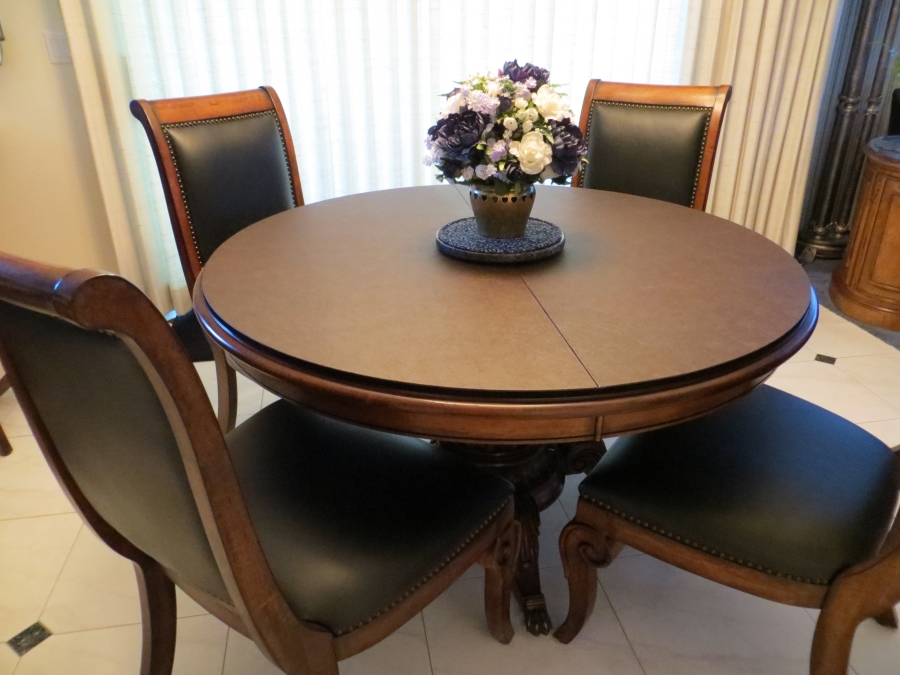
Do not keep anything made of plastic or vinyl in
contact of the finish which includes table cloths and place mats. The Plasticizer
will leach out and permanently soften the finish.
Back To Top

Tip #12
Squeaky bed frames
If you have metal bed frames and they squeak, simply apply some oil
to the rivets to quiet them down.
Back To Top

Tip #13
Sticky drawers
Any time you have wood moving against wood, you will need something
to keep the parts lubricated. If you have drawers that like to stick,
try rubbing some clear Briwax or any
other brand of paste wax on both the drawer and the wood it rides upon. It
is sometimes shocking what a difference it can make. If it doesn't help,
most likely the drawer will need some repair or is worn down.
Back To Top

Tip #14Removing
dark stains from wood
To remove darks rings, stains or gray oxidation,
you will need to use some oxalic acid crystals
. It is the main ingredient in the so called deck
brighteners. To use them, you have to mix them with warm water until you
reach a saturated solution meaning it won't dissolve anymore. Only mix
the amount you need. You will need to apply it with a synthetic brush
giving the entire surface a good wet coat (not just the stain) . The
wood will need to be bare and lightly sanded prior to this step. Leave
the acid on until it dries or until the stain has vanished. Follow that
with wash of water to removed the residue. The grain will be raised
after it dries, so you will need to sand it smooth before finishing.
Make sure you use a particle mask when sanding because the crystals will
make you sneeze if you inhale them. Do it outdoors if possible.
Back To Top

Tip #15
What kind of glue should I
use?
When it comes to doing repairs, it is very important to use the
proper glue for the job. When it comes to re-gluing joints on furniture
made prior to 1955, my favorite is Franklin brand liquid hide glue. It
has very good tack and strength plus has a longer working time which
comes in handy for re-gluing chairs.
Furniture made after 1955 to present day is constructed with
PVA (Poly Vinyl Acetate). It is the pale yellow glue for woodworking or
carpentry. If your project requires a long open time, this is not
the glue of choice. You are better off with the hide glue. For
broken components that are hard to clamp and wont ever need to come back
apart, I would recommend a five to thirty minute epoxy. I don't recommend
using this glue for the joints unless you have a lot of play in them. It is
the best gap filling glue out there. For fixing
hairline cracks that you can't get conventional glues into, You can use a
thin or thick cyanoacrylate commonly known as super glue. It works
even better if you use an accelerator to speed up the hardening process. You
might want to shop at a model airplane store to find it. I don't recommend
this glue in areas that need to be structurally significant. Remember to
keep a bottle of fingernail polish remover on hand just incase you glue your
fingers together or to the furniture.
Back To Top

Tip #16
Removing that musty odor To
begin the process of removing a musty odor from the inside of your
furniture, you will need to have a spray bottle of denatured alcohol or
other anti microbial spray. Open the cabinet and take out all of the drawers
and spray the entire inside of the piece. This will kill any mold spores
that may be lurking.
Let it dry opened up in a sunny place for a good
week. If this hasn't done the job, you will need to go to the next step of
sealing the raw wood with any type of finish which will seal in the odor.
You could also purchase a small electric ozone generator to eat up the odor
causing molecules.
A new approach might be using one of the new
products for removing odors from fabrics like Fabreeze. Although I would
still suggest killing the mold spores first.
Back To Top

Tip #17
In addition to using furniture wisely, it is important to handle it
carefully. Safe handling and moving of furniture begin with a basic
understanding of how a piece is constructed. The second step is to plan
carefully.
Before picking up a piece of furniture, determine how it is put together
and if any of its parts are removable or detachable. Make sure you know
where the furniture is its strongest - generally along a major horizontal
element - and try to carry it from these points.
Then examine the room and the route whereby the furniture is to be moved.
Look around to make sure you know where everything is. Identify potential
trouble. Light fixtures that hang low, for examples, or that extend out from
the wall may be damaged or cause damage. Glass table tops are also easily
damaged if bumped. If necessary, clear the way by moving or removing fragile
or obstructive items. Protect the furniture to be moved with soft padding or
wrap it in a blanket pad. Padding, which will provide extra insurance
against bumping and gouging, is especially important if an item is going
into storage.
Before moving an item, make sure you know exactly where it goes next.
Plan ahead to adjust the temperature and relative humidity in the new
location so they are the same as where the furniture presently is. Extreme
changes in temperature and humidity can cause splitting of joints and
veneers.
Never hurry when you are moving furniture. Scratches, dents, and gouges
from bumps against hand truck, doorways, and other furniture are always more
likely in haste. Each item needs to be approached individually, without
haste, and with sufficient manpower present.
Make sure you have a firm grip on the piece with both hands. Do not wear
cotton gloves. It is essential that hands not slip from a piece of furniture
while it is being moved.
Never slide or drag furniture along the floor. The vibration can loosen
or break joints, chip feet, break legs, etc., to say nothing of what
dragging does to the carpeting or finish on the floor. Whenever possible,
use trolleys or dollies for transporting heavy pieces.
Handling valuable furnishings requires a special attitude: in general,
movement should be carried out at a slower pace. Here are some quick tips
for moving furniture properly. Remember: If you don't break it, it doesn't
have to be fixed!
 | Just as gymnasts work with "spotters" to catch them when
they misstep, have helpers on hand to guide the movers so they don't
crash into walls or other pieces of furniture
 | Anticipate trouble; think through every step; plan ahead; and do
everything with care
 | Make sure the route is clear and has no obstructions, such as narrow
doorways or hanging chandeliers that might hinder the safe passage of
furniture and movers |
| |
The following sections offer suggestions for moving specific types of
furniture.
Seating Furniture
When lifting a chair, remember that the seat rail is its strongest part,
not the chair back. Frequently lifting by the back, especially the crest
rail, will eventually result in breakage. For small chairs, lift by the side
seat rails, one hand near the front on one side, the other near the rear on
the other side.
When lifting a large chair or sofa, the principles are the same. Grab
underneath the side frame, making sure to lift with your legs rather than
your back. For upholstered chairs or sofas, place your hands underneath the
frame to avoid touching the upholstery. If upholstery must be touched, use
cotton gloves. For chairs with slip seats, remove the slip seat and wrap and
move it separately to prevent its being soiled or falling out during the
move.
Tables
The strongest part of a table is generally the apron. Whenever possible,
lift the table carefully from the apron, never by the top or legs. Lifting
on the top rather than the apron may break the glue-blocks that hold the top
to the frame or strip out the screws that hold the top on. Grabbing the
legs, particularly tables with long, unsupported legs, will cause
unnecessary stress on the leg and the joint connecting it to the apron.
Whenever possible, wrap padding around a table's legs before moving it to
prevent chipping or breakage during the move.
If you are moving a drop-leaf table, first determine which support
members move. Is the table leaf supported by a bracket or by a swing-leg?
Fold the leaves down, and restrain them with padding and a tie band. If the
support is provided by a swing-leg or gate-leg, tie it in place as well. The
only safe place to grab a drop-leaf table is underneath the end
aprons. Grabbing by the legs, especially swing-legs, will increase the
chance of damage to them, and grabbing the table by the side leaves will
often result in fracturing the long rule joint that allows the leaves to
drop.
Case Furniture
While case pieces, especially large ones, may appear very different from
tables and chairs, the same rules apply. Never try to move a large piece by
yourself. A case piece requires at least two people. While a case piece
requires can be moved by carrying it carefully, holding on to the bottom as
you would a table or chair, it is better to move the piece on a dolly. A
dolly makes the move safer for both the movers and the object, and that is
all the more true for large objects.
First, examine the piece. How was is put together? And how can it come
apart? Take the piece apart as much as is possible. That is, remove the top
piece of a cabinet from its base; remove the cornice or pediment, if there
is one.
If the carcass is sturdy enough, remove an drawers to lighten the load
and make the move easier. Carry the drawers separately to the destination.
However, if the carcass is weak and shifts from side-to-side, leave the
drawers in place to provide stability and prevent further damage to the
joints. Tall pieces that do not come apart into separate sections need to be
set on their sides on a dolly to prevent their topping over.
If the piece has handles, wrap them with padding. Padding protects the
handles, the furniture surface (if the handles have swinging bales or
drops), the movers, and the surroundings in case you bump up against
anything.
Never grab a heavy piece like a chest of drawers or bookcase by the
cornice at the top. The attachment of the top to the base may be loosened
and pull apart from the rest of the piece.
Lift the piece straight up, using your legs, not your back. Don't let it
tilt, and do not grab it by its hardware or any other protrusions.
Large Clocks
The moving project becomes increasingly difficult with objects that are
large and complex. Objects that come apart into many pieces or are unwieldy
require extra care and preparation. Because of their many parts grandfather
and grandmother clocks are very difficult to move.
Always remove the pendulum and weights from within the clock before doing
anything else. These pieces are heavy and will damage the clock case if they
smash into the side of the case. They may also cause damage to the mechanism
itself. Wear cotton gloves when you remove the pendulum and weights, to
avoid corroding the metal pieces from skin contact.
Remove the hood from the top of the clock (they often slide forward), and
lay it down to pack and move separately. Make sure the door to the case is
locked or securely closed before moving the clock. Use bare hands, not
gloves, for moving and packing the carcass of the case. For short moves,
like those of only a few feet, it is permissible to lift by grabbing the
narrow case from the underside of the molding at the top of the waist, or
center portion of the case, provided that the molding is firmly attached to
the case itself. For longer moves, or if that molding is not secure, the
clock case should be carried flat like a coffin.
Back To Top

Tip #18
The guidelines for furniture maintenance are pretty simple. If the
furniture is used wisely and handled carefully, it will need very little in
the way of routine maintenance. But in cleaning and polishing furniture
surfaces and hardware, and in re-upholstering, some well-intentioned
caretakers introduce damage. In fact, a lot of what furniture conservators
do is respond to destructive maintenance practices.
Cleaning Surfaces
For the most part, maintaining furniture simply means keeping it clean,
carefully. Wood furniture usually needs to be cleaned only when there is a
buildup of wax or dirt. Only unfinished wood, painted wood, or wood with a
sturdy finish should be cleaned. The finish on giltwood is often applied
with a water-soluble size, or adhesive; it should be carefully dusted, not
cleaned, or cleaned only by a professional.
Before cleaning wood or coatings, the first and most important step is to
evaluate the surface and make sure that the surface or coating is stable and
not apt to be damaged by the contact required in cleaning and polishing. If
the surface is unstable, the polishing could knock off loose portions.
Damaged surfaces should be referred to a conservator.
After the soundness of the surface has been established, the next step is
to find out what the dirt is and what the surface is. If you can't determine
these exactly, find out what removes the dirt without affecting the surface
underneath it. Often, dust can be removed with the careful wipe of a damp
cloth. Oily dirt or waxy residue can be removed with a mild detergent and
water solution or with mineral spirits. However, it is vital to make sure
that the cleaning solution does not affect the underlying surface.
Even when you determine a cleaning method that works successfully, proceed
cautiously.
Loose dust on the surface can be removed with a soft, lint-free cloth,
gently rubbed over the surface. Dust is an abrasive and can scratch the
surface, so be careful. Uneven areas can be dusted with a clean, natural
bristle paint or artist's brush. Again, do not try to dust a surface that is
severely deteriorated. Cloth fibers can catch and tear away pieces of the
finish, veneer or loose parts. Even rough edges can splinter. Carving,
fretwork, and other delicate work can be dusted with a soft bristle brush,
with a vacuum cleaner host held close enough to take in the dust one it is
dislodged by the brush. Do not use feather dusters, as they can scratch and
pull off loose fragments of veneer.
Surfaces in good condition but with a heavy accumulation of dust can be
cleaned very carefully with a vacuum cleaner. Use the lowest suction
available and the round brush attachment. Don't let the metal or hard
plastic parts of the vacuum bump into the surfaces; they can scratch the
finish or wood. Much damage, in fact, occurs as the feet and bases of pieces
are hit with the vacuum cleaner.
Dirt that cannot be simply vacuumed off may be removed with cleaners
mixed in a dilute solution, but only if the finish is in good solid
condition. First, determine which solvent removes the dirt without removing
the finish. Those to be tested include mineral spirits (white spirit), paint
thinner, and naphtha. Second, test a small spot in an obscure area with the
solution on a cotton swab. All areas that appear to be a different coating
or material must be tested separately. Only if the solution does not damage
the test area should it be used to clean the rest of the piece.
For finished wood, dampen a cotton cloth with the solvent or cleaning
solution, and gently rub over a small area at a time. Avoid using too much
liquid, as they can cause damage. Then, wipe the cleaned surface with a
clean dampened cloth to remove any cleanser residues, followed by a dry soft
cloth.
Following simple cleaning, further protection and aesthetic enhancement
can be obtained through the application of a stable, hard furniture polish,
such as a hard paste wax. The hard wax surface can be dusted more easily
because it will be more smooth, and the dust will not be imbedded in it as
it would in an un-waxed surface. Waxing need only occur infrequently because
the wax itself is not readily removed and it does not degrade chemically.
Waxing too often can result in a built-up, clouded surface.
This simple approach avoids the problems created by popular methods of
"furniture polishing" - such as sprays and oily polishes - that
may result in cumulative damage to furniture. Many polishes and residues
continue to be a vexing problem for furniture conservators, as they can
build up over time and with numerous applications, trapping and adhering
airborne dirt onto the surface.
For a more in-depth discussion of furniture polishes, refer to the
appendix at the end of this text.
Dusting upholstery can be accomplished by a vacuum cleaner. Place a soft
screen on the surface to prevent any snagging or abrasion from the vacuum
tip, and using a brush attachment, carefully vacuum the surface.
Stains and other damage to upholstery should be referred to an upholstery
or textile conservator for further treatment.
One never-ending concern of furniture caretakers is for the hardware,
including handles, brackets, hinges and escutcheons attached, usually with
nails, to the outer surface of a piece. The metal in hardware might be
brass, silver, gold-plated bronze, depending upon the style, date and
country of origin. Contemporary hardware attachments sometimes have a clear
lacquer finish that gives them a shiny appearance. Antique hardware is also
sometimes coated by restorers and conservators to eliminate the need for
constant polishing. There is currently a lot of debate in the conservation
field as to whether metal hardware should be lacquered or polished. Neither
is an option is there is evidence of an original varnish or if abrasive
polishing would remove some other original surface treatment.
Furniture hardware may become dirty and tarnished with use and exposure
to the atmosphere. In such cases, polishing it can be justified. However,
even this step is sometimes a poorly informed one. One common example of the
damage is created by polishing hardware supposed to be brass, when it is
really gilded bronze that is simply dirty. Polishing removes the gold,
damaging the surface of a beautiful sculptural element.
If you choose to polish, remove the hardware from the piece, noting the
exact location of each screw and nut. Polishing the hardware while on the
piece damages the surrounding finish and also allows polishes to run beneath
the hardware that can further damage both the metal hardware and the finish.
Clean hardware carefully with a 50/50 mix of acetone and alcohol to
remove any dirt and oil residue, scrubbing the piece with a soft bristle
brush. After drying, the surface can be polished with a fine, lint-free
cloth of felt block charged with a very fine abrasive, such as calcium
carbonate or jeweler's micro polish, in an alcohol or mineral spirits
slurry. Commercial polishes can contribute to the deterioration of the
hardware, as they frequently contain harsh cleaners that corrode the metal.
If the hardware cannot be removed safely from the furniture it can be
polished and coated on the object provided the following precautions are
scrupulously followed. First, the surface of the wood and varnish must be
completely protected. Acetate sheets, such as those found in office supply
stores, can be notched and slid under the hardware from both sides to form
an overlapping barrier. Without this precaution, attempts to polish the
hardware will likely end in disaster.
Since this hardware cannot be doused with the acetone and alcohol
mixture, cleaning must be done by dipping swabs in the solution, then
rubbing the metal surface with the swab. Polishing must also be done more
carefully, perhaps on a smaller scale.
After polishing, remove all residues. The surface of the hardware that
has been removed from the furniture can be easily coated with a transparent
resin before the hardware is replaced on the piece. Particular care must be
used in applying any coating when the hardware cannot be removed, to make
sure that no protective varnish for the hardware gets on the furniture piece
itself.
Back To Top

Tip #19
There are several factors to weigh when deciding to use polishes and
waxes on furniture and other wooden objects. One critical factor is that the
ingredients in commercial polishes and cleaning products are rarely
disclosed. Moreover, these ingredients can be, and frequently are, changed
without warning or notification. These ingredients may be harmless or
harmful to the furniture (and to you) and you have no way of knowing in
advance.
Polishing products are available in three forms: aerosol (spray); liquid;
and semisolid. Here is a quick look at their benefits and drawbacks.
Aerosols (Spray Polishes)
Aerosols are convenient. However, they have been among the worst
offenders in introducing silicone oils and other contaminants onto
furniture. In addition, they may contain solvents that attack varnishes and
lacquers. While some of the "dusting" aerosols appear to be benign
when applied to a cloth and not the piece of furniture, the result is
similar to using a damp, clean dust cloth.
Like aerosols, liquid polishes are easy to use. There are two primary
forms of commercial liquid products for "furniture care": emulsion
cleaner or polishes and "oil type" polishes. Emulsion polishes are
waxes, oils, detergents, organic solvents, and other materials suspended in
water for ease of application. These products can be extremely powerful
cleaners that leave a desirable sheen on the surface. However, the visual
effect usually diminishes as the liquid dries. Moreover, like aerosols,
emulsion polishes can introduce contaminants onto the furniture, but because
they are liquids they place much more volume than sprays on the furniture
surface.
Oil polishes are even more troublesome. Much like emulsion polishes, oil
polishes can be a complex blend of ingredients including oils, waxes,
perfumes, colorants, "cleaners," and organic solvents. They can
render extremely pleasing surfaces and are used frequently as final finishes
by themselves. However, oils used as polishes or cleaners can be very
damaging.
Nondrying oils (paraffin, mineral, and "lemon oil," which is
usually mineral oil with colorants and perfumes added) tend to be more
benign than drying oils, but even so some oil remains as a liquid on (or in)
the object. Dust and other airborne contaminants readily stick to wet
surfaces, especially oils. But nondrying oils don't undergo chemical
reactions or directly damage the furniture.
Drying oils, on the other hand, such as linseed, tung, or walnut oil, are
a different matter altogether. These materials solidify, or "dry"
through a chemical reaction with the air called oxidation. Over time this
reaction makes them increasingly difficult to remove. Their permanence is
fine if the oil is employed as the finish, but not good if it is used as a
maintenance polish. By itself, having a polish that is difficult to remove
would be an irritating but not an insurmountable problem. Unfortunately, as
drying oils age they tend to yellow and in the presence of acids they are
chromogenic (become Colored), turning a dark, muddy brown or opaque black.
Traditionally, cleaning and polishing concoctions comprised of linseed
oil, turpentine, beeswax, and vinegar (acetic acid) were widely used even in
the museum field until recently. They turned out to be a disaster waiting to
happen. The results of their use are readily apparent to even the casual
observer: a thick incrustation of chocolate-colored goo that is neither hard
enough to be durable nor soft enough to wipe off easily. The furniture is
left with an unsightly coating that is very difficult to remove without
damaging the underlying surface.
By virtually any measure semisolid polishes are the least damaging to
wooden objects. Frequently called "paste waxes," these products
are actually a very concentrated solution of waxes. Provided the ingredients
do not include undesirable contaminants like silicone or high concentrations
of damaging organic solvents such as alcohol, xylene, or toluene, paste
waxes are an excellent polish for the surfaces of most wooden objects.
Because waxes are exceedingly stable and don't cause many of the problems
inherent in the previously mentioned polishes, they are the material of
choice for furniture conservators and other caretakers of furniture and
wooden objects. But paste waxes have their faults too: unfortunately, they
require the most active contact with the surface of the furniture, and also
need the most physical labor for proper application. Buffing out a wax
polish can be very hard work, and in general, the better quality the wax,
the harder the buffing that is needed. However, the results and benefits to
the furniture are worth the extra effort.
Fortunately, as the most durable and stable polishing material, paste wax
needs to be applied much less often than aerosols or liquids. Ideally, wax
polishing should be conducted no more than twice a year for areas of
extremely heavy wear (desktops, chair arms, etc.) and once every three or
four years for table and chair legs, cabinets, and similar areas.
If a surface can no longer be buffed to the sheen appropriate for a waxed
surface, it is likely that the wax has worn off. In that case, apply another
light coat of wax to the affected area in accordance with the product
instructions. Wax that is applied too frequently or improperly can build-up
and cause an unsightly surface. When the wax is used correctly, however, the
solvent content of the new wax will "clean off" any previous wax
remaining on the surface and will simply integrate the old into the new.
Back To Top

Tip #20
Is it oil Based or latex/acrylic paint
To
determine what type of paint is on your furniture, brush some
stripper on an inconspicuous spot and see what happens. If it is oil
based, the paint will wrinkle and bubble. If it just softens up into a
slimy goo, it is latex or acrylic. Oil based paint is the easiest to
remove.
Back To Top

|